Heat response
Friction warms the surface, and how much warmth a plastic tolerates before it softens is the main difference between these four. The figures are rough and depend on brand and colour.
- PLA: softens at a fairly low temperature, roughly 55-60 °C, so friction heat can blur edges and smear the surface.
- PLA+: broadly similar in spirit to PLA, but blends differ by brand, so check how your spool behaves on a spare print.
- PETG: softens at a higher temperature, roughly 80 °C, yet it warms up and smears rather than cuts if you rush.
- ABS: tolerates more heat than PLA or PETG, though friction can still mark it.
Sanding behaviour
- PLA: tends to cut cleanly and shows progress readily, as long as heat stays under control.
- PLA+: often a little tougher, so abrasion can feel different from plain PLA. Go slowly on the first test.
- PETG: tends to gum up and load the abrasive, and it can haze or smear. Keep it cool, keep the abrasive clean, and expect to adjust.
- ABS: generally sands well, but the fine dust is as much a concern as with the others, so control it.
Polish response
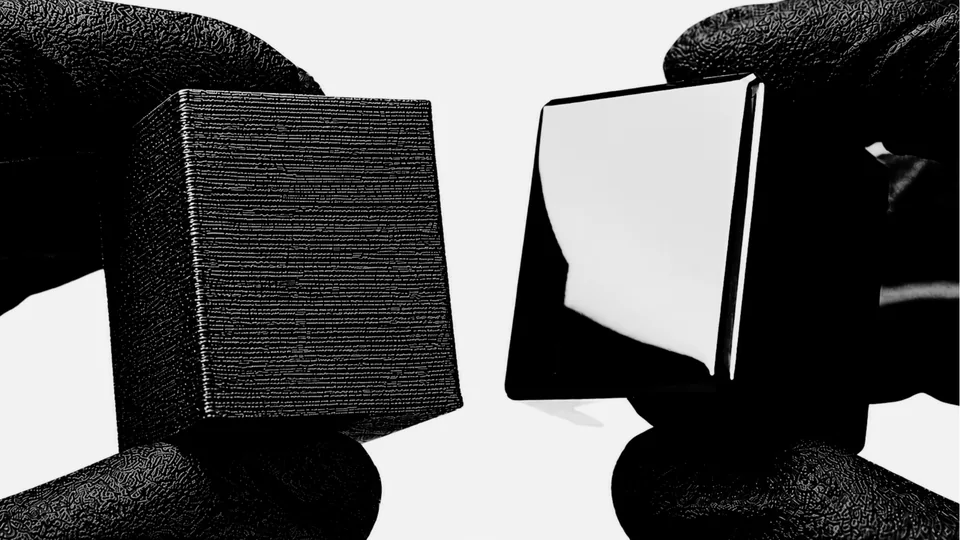
In every case, polish shows what is underneath. It follows an even surface and it cannot hide an uneven one.
- PLA: can take a clear reflection once the surface beneath is even.
- PLA+: behaves broadly like PLA. Test the blend you actually use.
- PETG: can polish too, but heat and smear are the thing to watch. A hazy film means stop and let it cool.
- ABS: can polish too. The result depends on the surface underneath.
Not covered: Silk, TPU and filled filaments
PolishMaster’s method is for FDM prints in PLA, PLA+, PETG and ABS. Silk, TPU and filled filaments are outside it: they behave differently, and the method is not written for them.
Choosing between them
You do not need to rank them. Use what you have printed, test on a spare part, and let heat and smear tell you when to slow down. Where to read next:
- PETG in more detail:How to Sand PETG 3D Prints
- PLA surfaces:How to Remove Layer Lines from PLA Prints
- Water in the later stages:Wet Sanding 3D Prints: When and How
- Learn on small shapes first:Practice Cubes for Learning 3D Print Finishing
Bottom line
PLA, PLA+, PETG and ABS all take the same mechanical route: sand in stages, then polish. They differ mostly in how they handle heat and how the abrasive behaves, so go slowly, keep dust under control, and test on a spare part first.