Finishing guides
Surface-control guides for FDM prints.
Learn how PolishMaster reads defects, materials, geometry, coatings, and finish intent—without publishing one-size-fits-all recipes.
Diagnose
Sand
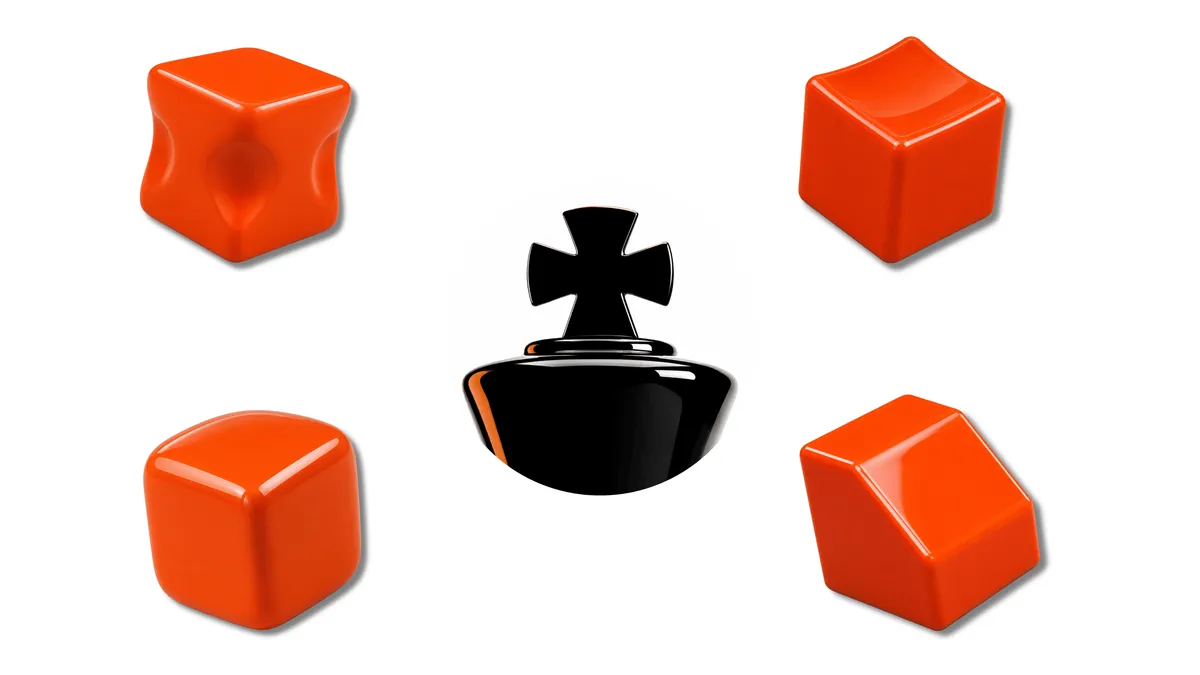
Skill building · 3 min
Practice Cubes for Learning 3D Print Finishing
Why isolated practice forms build pressure control, abrasive judgment, and geometry awareness.
Read article →
Sanding2 min read
How to Sand 3D Prints
Decide when sanding corrects the surface, what to watch, and when to stop.
Read →
Sanding2 min read
How to Choose Sanding Stages for 3D Prints
Choose abrasive stages by defect, material response, geometry, and finish target.
Read →
Tools2 min read
Sanding Tool Types for 3D Prints
Match a firm block, a soft backing, a sheet, or a rotary tool to the geometry.
Read →
Technique3 min read
Wet Sanding 3D Prints: When and How
Know when to move from dry leveling to wet surface refinement.
Read →
Sanding3 min read
How to Remove Layer Lines from PLA Prints
Read visible ridges, preserve edges, and verify the surface under directional light.
Read →
PETG3 min read
How to Sand PETG 3D Prints
Read heat, material response, geometry, and coating compatibility on PETG.
Read →
Sanding4 min read
Removing Support Marks and Seams from 3D Prints
How orientation and seam placement cut finishing work, and how to sand a scar in stages.
Read →
Materials4 min read
PLA vs PLA+ vs PETG vs ABS for Sanding and Polishing
How each filament responds to heat, sanding, and polishing, and which filaments are outside the method.
Read →
Polish
Polishing3 min read
When to Polish a 3D Print
Polish for reflection only after the surface is already even.
Read →
Polishing6 min read
How to Polish 3D Prints
What polishing can and cannot fix, hand versus powered tools, and how to read haze.
Read →
Polishing4 min read
Mirror Finish on 3D Prints
What a mirror finish needs, and why most attempts stay hazy.
Read →
Surface finish3 min read
How to Make 3D Prints Smooth
See how geometry, material response, primer readiness, and sheen shape the result.
Read →
Surface finish3 min read
Does Acetone Smooth PLA, PETG or ABS?
Acetone acts on ABS, not on PLA or PETG, and its vapor is a hazard. What to do instead.
Read →
Finish choices and paint
Finish choice3 min read
Matte vs Gloss Finish on 3D Prints
How reflection, preparation, handling, and lighting change after the surface is controlled.
Read →
Surface control3 min read
How to Make 3D Prints Look Injection Molded
Texture, edges, reflections, and color consistency on finished FDM parts.
Read →
Primer3 min read
Do You Need Primer on a 3D Print?
Primer is a question about paint, not about shine. When it helps and when you can skip it.
Read →
Primer3 min read
When to Use Filler Primer on 3D Prints
Evaluate primer compatibility, surface readiness, safety, and finish quality.
Read →
Painting3 min read
How to Spray Paint 3D Prints
Surface readiness, coating compatibility, environment, cure guidance, and sheen.
Read →
Selling
Explore the Formula.
The complete surface-control method is a one-time $97 purchase. No subscription.
Get the FormulaSecure checkout by Gumroad. The course is delivered in the PolishMaster Student Portal.
Questions about the method first? Read the FAQ.